 Him Phannary
2026-06-18 11:32:05
Him Phannary
2026-06-18 11:32:05 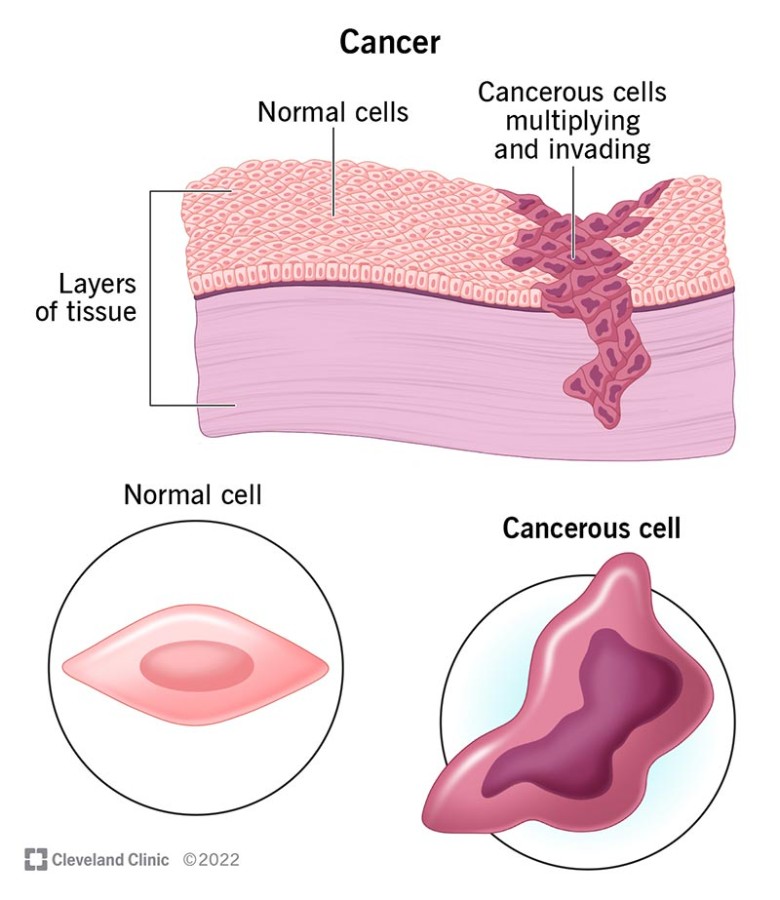
កោសិកាមហារីក
តើជំងឺមហារីកជាអ្វី?
ជំងឺមហារីកគឺជាក្រុមជំងឺដ៏ធំមួយដែលមានរឿងមួយដូចគ្នា៖ វាកើតឡើងនៅពេលដែលកោសិកាធម្មតាក្លាយជាកោសិកាមហារីកដែលកើនឡើង និងរីករាលដាល។ ហ្សែនរបស់អ្នកផ្ញើការណែនាំទៅកោសិការបស់អ្នក ដូចជាពេលណាត្រូវចាប់ផ្តើម និងឈប់លូតលាស់ជាដើម។ កោសិកាធម្មតាធ្វើតាមការណែនាំទាំងនេះ ប៉ុន្តែកោសិកាមហារីកមិនអើពើនឹងពួកវាទេ។
ជំងឺមហារីកគឺជាមូលហេតុទូទៅបំផុតទីពីរនៃការស្លាប់នៅសហរដ្ឋអាមេរិក។ ប៉ុន្តែមានមនុស្សតិចជាងមុនដែលស្លាប់ដោយសារជំងឺមហារីកឥឡូវនេះជាង 20 ឆ្នាំមុន។ ការរកឃើញដំបូង និងការព្យាបាលប្រកបដោយភាពច្នៃប្រឌិតគឺការព្យាបាលជំងឺមហារីក និងជួយមនុស្សដែលមានជំងឺមហារីកឱ្យរស់នៅបានយូរ។
ប្រភេទនៃជំងឺមហារីក
មានជំងឺមហារីកជាង 100 ប្រភេទ។ អ្នកផ្តល់សេវាថែទាំសុខភាពចាត់ថ្នាក់ពួកវាតាមកន្លែងដែលពួកវាចាប់ផ្តើមនៅក្នុងខ្លួនរបស់អ្នក និងប្រភេទជាលិកាដែលពួកវាប៉ះពាល់។ មានចំណាត់ថ្នាក់មហារីកធំៗបី៖
- មហារីករឹង៖នេះគឺជាប្រភេទមហារីកទូទៅបំផុត ដែលមានប្រហែល 80% ទៅ 90% នៃករណីទាំងអស់។ នេះរួមបញ្ចូលទាំងមហារីកដែលបង្កើតនៅក្នុងជាលិកាអេពីធីលីល (ដូចជាស្បែក សុដន់ ពោះវៀនធំ និងសួតរបស់អ្នក) និងមហារីកសាកូម៉ាដែលបង្កើតនៅក្នុងឆ្អឹង និងជាលិកាភ្ជាប់។
- មហារីកឈាម៖ទាំងនេះគឺជាមហារីកដែលចាប់ផ្តើមនៅក្នុងកោសិកាឈាម ឬប្រព័ន្ធឡាំហ្វាទិចរបស់អ្នក។ ឧទាហរណ៍រួមមាន ជំងឺមហារីកឈាម ឡាំហ្វាទិច និង មីអ៊ីឡូម៉ាច្រើន។
- ចម្រុះ៖មហារីកដែលពាក់ព័ន្ធនឹងចំណាត់ថ្នាក់ ឬប្រភេទរងពីរ។ ឧទាហរណ៍រួមមាន carcinosarcoma និង adenosquamous carcinoma។
តើជំងឺមហារីកកើតមានញឹកញាប់ប៉ុណ្ណា?
ជំងឺមហារីកគឺជាមូលហេតុទូទៅបំផុតទីពីរនៃការស្លាប់នៅទូទាំងពិភពលោក។ អ្នកស្រាវជ្រាវប៉ាន់ប្រមាណថា នៅឆ្នាំ ២០២៤ មនុស្សជាង ២ លាននាក់ដែលរស់នៅក្នុងសហរដ្ឋអាមេរិកនឹងទទួលបានការធ្វើរោគវិនិច្ឆ័យជំងឺមហារីក ហើយមនុស្សជាង ៦១១.០០០ នាក់នឹងស្លាប់ដោយសារជំងឺនេះ។
ប្រហែល ១ នាក់ក្នុងចំណោម ៤ នាក់នឹងវិវត្តទៅជាជំងឺមហារីកនៅចំណុចណាមួយក្នុងជីវិតរបស់ពួកគេ។
ជំងឺមហារីកទូទៅបំផុតនៅសហរដ្ឋអាមេរិកគឺ៖
- ជំងឺមហារីកសុដន់។
- ជំងឺមហារីកសួត។
- ជំងឺមហារីកក្រពេញប្រូស្តាត។
- ជំងឺមហារីកពោះវៀនធំ។
- ជំងឺមហារីកឈាម។
អ្នកណាក៏អាចវិវត្តទៅជាជំងឺមហារីកបានដែរ ប៉ុន្តែករណីនីមួយៗប្រែប្រួលអាស្រ័យលើពូជសាសន៍ និងភេទ។ យោងតាមរបាយការណ៍ប្រចាំឆ្នាំ 2022 ស្តីពីជំងឺមហារីក ជំងឺនេះ៖
- ប៉ះពាល់ដល់បុរសច្រើនជាងស្ត្រីបន្តិច។
- ប៉ះពាល់ដល់មនុស្សដែលមានអាយុលើសពី 60 ឆ្នាំច្រើនជាងក្រុមអាយុដទៃទៀត។
- ប៉ះពាល់ដល់បុរសស្បែកខ្មៅច្រើនជាងអ្នកដែលមកពីក្រុមជាតិសាសន៍ដទៃទៀត។
- ប៉ះពាល់ដល់ស្ត្រីដែលជាជនជាតិអាមេរិកាំងឥណ្ឌា ឬជនជាតិដើមអាឡាស្កាច្រើនជាងអ្នកដែលមកពីក្រុមជាតិសាសន៍ដទៃទៀត។
តើអ្វីទៅជារោគសញ្ញានៃជំងឺមហារីក?
រោគសញ្ញានៃជំងឺមហារីកខុសគ្នាពីមនុស្សម្នាក់ទៅមនុស្សម្នាក់។ ពួកវាអាស្រ័យលើប្រភេទមហារីកដែលអ្នកមាន និងកម្រិតវវឌ្ឍភាពរបស់វា។
រោគសញ្ញាទូទៅនៃជំងឺមហារីកអាចរួមមាន៖
- អស់កម្លាំង។
- គ្រុនក្តៅដែលភាគច្រើនកើតឡើងនៅពេលយប់។
- បាត់បង់ចំណង់អាហារ។
- បែកញើសពេលយប់។
- ឈឺចាប់ជាប់រហូត។
- ការផ្លាស់ប្តូរស្បែក ជាពិសេសប្រជ្រុយដែលផ្លាស់ប្តូររូបរាង និងទំហំ ឬប្រជ្រុយថ្មី។
- ការសម្រកទម្ងន់ដែលមិនអាចពន្យល់បាន។
ក្នុងករណីខ្លះ ជំងឺមហារីកអាចបណ្តាលឱ្យមានរោគសញ្ញាជាក់លាក់បន្ថែមលើសរីរាង្គ។ ទាំងនេះអាចរួមមាន៖
- មានឈាមក្នុងទឹកនោម ឬក្នុងលាមករបស់អ្នក។
- ការផ្លាស់ប្តូររូបរាង ពណ៌ ឬទំហំនៃប្រជ្រុយលើស្បែក។
- ក្អកមានឈាម។
- ដុំពក ឬដុំពកថ្មី។
នេះមិនមែនជាបញ្ជីពេញលេញទេ។ ហើយការមានរោគសញ្ញាទាំងនេះមិនចាំបាច់មានន័យថាអ្នកមានជំងឺមហារីកនោះទេ។
ជំងឺមហារីកគឺជាជំងឺស្មុគស្មាញ។ ប្រភេទផ្សេងៗគ្នាបណ្តាលឱ្យមានរោគសញ្ញាខុសៗគ្នា។ វាក៏អាចកើតមានជំងឺមហារីកអស់រយៈពេលជាច្រើនឆ្នាំដោយមិនដឹងខ្លួនផងដែរ។ ពេលខ្លះទៀត វាអាចបណ្តាលឱ្យមានរោគសញ្ញាជាក់ស្តែងដែលកាន់តែអាក្រក់ទៅៗយ៉ាងឆាប់រហ័ស។
ច្បាប់ល្អមួយគឺត្រូវប្រាប់អ្នកផ្តល់សេវាថែទាំសុខភាពឱ្យដឹងនៅពេលណាដែលមានការផ្លាស់ប្តូរនៅក្នុងខ្លួនរបស់អ្នកដែលមានរយៈពេលលើសពីពីរសប្តាហ៍។
អ្វីដែលបណ្តាលឱ្យមានជំងឺមហារីក?
ជំងឺមហារីកគឺជាជំងឺហ្សែន។ ប៉ុន្តែនោះមិនចាំបាច់មានន័យថាវាត្រូវបានទទួលមរតកនោះទេ។ វាកើតឡើងនៅពេលដែលហ្សែនដែលគ្រប់គ្រងសកម្មភាពកោសិកាផ្លាស់ប្តូរ (ផ្លាស់ប្តូរ)។ ពួកវាបង្កើតកោសិកាមិនប្រក្រតីដែលបែងចែក និងគុណ ដែលនៅទីបំផុតរំខានដល់របៀបដែលរាងកាយរបស់អ្នកដំណើរការ។
កោសិកាទាំងនេះបង្កើតចង្កោមមហារីក ឬដុំសាច់។ កោសិកាមហារីកអាចបែកចេញពីដុំសាច់ ហើយធ្វើដំណើរទៅកាន់តំបន់ផ្សេងទៀតនៃរាងកាយរបស់អ្នកតាមរយៈប្រព័ន្ធឡាំហ្វាទិច ឬចរន្តឈាមរបស់អ្នក។ (អ្នកផ្តល់សេវាថែទាំសុខភាពហៅវាថា metastasis)។
ឧទាហរណ៍ ដុំសាច់នៅក្នុងសុដន់របស់អ្នកអាចរីករាលដាលដល់សួតរបស់អ្នក ដែលធ្វើឱ្យអ្នកពិបាកដកដង្ហើម។ នៅក្នុងជំងឺមហារីកឈាមប្រភេទខ្លះ ខួរឆ្អឹងរបស់អ្នកបង្កើតកោសិកាឈាមមិនប្រក្រតីដែលគុណមិនអាចគ្រប់គ្រងបាន។ នៅទីបំផុត កោសិកាមិនប្រក្រតីនឹងគ្របដណ្ដប់លើកោសិកាឈាមធម្មតា។
យោងតាមអ្នកស្រាវជ្រាវផ្នែកវេជ្ជសាស្ត្រ ការផ្លាស់ប្តូរហ្សែនដែលទទួលមរតក (ការផ្លាស់ប្តូរដែលអ្នកមិនអាចគ្រប់គ្រងបាន) បណ្តាលឱ្យមានប្រហែល 5% ទៅ 10% នៃជំងឺមហារីកទាំងអស់។ ជាញឹកញាប់ ជំងឺមហារីកកើតឡើងជាការផ្លាស់ប្តូរហ្សែនដែលទទួលបាន (ការផ្លាស់ប្តូរ)។ នោះមានន័យថាវាកើតឡើងពេញមួយជីវិតរបស់អ្នក។ អ្នកស្រាវជ្រាវផ្នែកវេជ្ជសាស្ត្របានកំណត់អត្តសញ្ញាណកត្តាហានិភ័យជាច្រើនដែលបង្កើនឱកាសនៃការវិវត្តទៅជាជំងឺមហារីករបស់អ្នក។
កត្តាហានិភ័យ
មិនមានមូលហេតុតែមួយសម្រាប់ជំងឺមហារីកនោះទេ។ ផ្ទុយទៅវិញ រឿងមួយចំនួនអាចបង្កើនឱកាសនៃការវិវត្តរបស់អ្នកដូចជា៖
- ប្រវត្តិគ្រួសារ។ប្រសិនបើអ្នកមានសមាជិកគ្រួសារជីវសាស្រ្តជិតស្និទ្ធ (ឪពុកម្តាយ បងប្អូន ជីដូនជីតា) ដែលមានជំងឺមហារីក អ្នកមានហានិភ័យខ្ពស់ក្នុងការវិវត្តវា។
- ការជក់បារី។ការជក់បារី ឬការប្រើប្រាស់បារីអេឡិចត្រូនិច បង្កើនឱកាសនៃការវិវត្តទៅជាជំងឺមហារីកសួត បំពង់អាហារ លំពែង និងមាត់។
- កត្តាបរិស្ថាន។ការប៉ះពាល់នឹងជាតិពុលនៅក្នុងបរិស្ថានរបស់អ្នក ដូចជាអាបស្តូស ថ្នាំសម្លាប់សត្វល្អិត និងរ៉ាដុង អាចនាំឱ្យមានជំងឺមហារីកនៅទីបំផុត។
- កង្វះអាហារូបត្ថម្ភ។អាហារដែលមានជាតិខ្លាញ់ខ្ពស់ ឬជាតិស្ករខ្ពស់អាចបង្កើនហានិភ័យនៃជំងឺមហារីកជាច្រើនប្រភេទ។ អ្នកក៏ងាយនឹងកើតជំងឺផងដែរ ប្រសិនបើអ្នកមិនទទួលបានសកម្មភាពរាងកាយគ្រប់គ្រាន់។
- ការព្យាបាលដោយអរម៉ូន។ស្ត្រីដែលទទួលការព្យាបាលជំនួសអរម៉ូនអាចមានហានិភ័យខ្ពស់នៃជំងឺមហារីកសុដន់ និងមហារីកស្បូន។
- ការប៉ះពាល់នឹងវិទ្យុសកម្ម។កាំរស្មីអ៊ុលត្រាវីយូឡេ (UV) ពីព្រះអាទិត្យបង្កើនហានិភ័យនៃការវិវត្តទៅជាជំងឺមហារីកស្បែកយ៉ាងខ្លាំង។ ការប៉ះពាល់នឹងការព្យាបាលដោយវិទ្យុសកម្មច្រើនពេកក៏អាចជាកត្តាហានិភ័យមួយផងដែរ។
តើជំងឺមហារីកត្រូវបានធ្វើរោគវិនិច្ឆ័យយ៉ាងដូចម្តេច?
អ្នកផ្តល់សេវាថែទាំសុខភាពចាប់ផ្តើមធ្វើរោគវិនិច្ឆ័យជំងឺមហារីកដោយធ្វើការពិនិត្យរាងកាយពេញលេញ។ ពួកគេនឹងសុំឱ្យអ្នកពិពណ៌នាអំពីរោគសញ្ញា និងប្រវត្តិវេជ្ជសាស្ត្រគ្រួសាររបស់អ្នក។ ពួកគេក៏អាចត្រូវធ្វើផងដែរ៖
- ការធ្វើតេស្តឈាមសម្រាប់ជំងឺមហារីក ដែលអាចរួមបញ្ចូលការរាប់ឈាមពេញលេញ (CBC) ការធ្វើតេស្តប្រូតេអ៊ីនឈាម និងការធ្វើតេស្តសម្គាល់ដុំសាច់។
- ការធ្វើតេស្តរូបភាពដូចជាការស្កេន CT, MRI, អ៊ុលត្រាសោន ឬអ៊ីយ៉ូត metaaiodobenzylguanidine (MIGB)។
- ការធ្វើកោសល្យវិច័យ ដែលអាចវះកាត់ (ដោយមានស្នាមវះ) ឬមិនវះកាត់ (ដោយមានម្ជុល)។
- ការធ្វើតេស្តហ្សែនសម្រាប់ជំងឺមហារីក ដើម្បីធ្វើរោគវិនិច្ឆ័យ និងរៀបចំផែនការព្យាបាលសម្រាប់ទម្រង់មហារីកដែលទទួលមរតក។
តើដំណាក់កាលមហារីកត្រូវបានកំណត់យ៉ាងដូចម្តេច?
អ្នកផ្តល់សេវាថែទាំសុខភាពប្រើប្រាស់ប្រព័ន្ធកំណត់ដំណាក់កាលមហារីកដើម្បីរៀបចំផែនការព្យាបាល និងបង្កើតការព្យាករណ៍ ឬលទ្ធផលដែលរំពឹងទុក។
ជំងឺមហារីកភាគច្រើនមានបួនដំណាក់កាល។ ដំណាក់កាលជាក់លាក់ត្រូវបានកំណត់ដោយកត្តាផ្សេងៗគ្នាមួយចំនួន រួមទាំងទំហំ និងទីតាំងរបស់ដុំសាច់។
ដំណាក់កាល I-III (1-3) (ដំណាក់កាលដំបូង ឬដំណាក់កាលជឿនលឿនក្នុងតំបន់) ជាធម្មតាពិពណ៌នាអំពីជំងឺមហារីកដែលបានលូតលាស់ដោយផ្ទាល់ទៅក្នុងជាលិកាជុំវិញ ឬបានរីករាលដាលដល់កូនកណ្តុរនៅក្បែរនោះ។
ដំណាក់កាល IV (4) (ឬមហារីកមេតាស្តាទិច) មានន័យថាកោសិកាមហារីកបានរីករាលដាលដល់តំបន់ឆ្ងាយៗនៃរាងកាយរបស់អ្នកតាមរយៈចរន្តឈាម ឬប្រព័ន្ធឡាំហ្វាទិចរបស់អ្នក។
តើជំងឺមហារីកត្រូវបានព្យាបាលយ៉ាងដូចម្តេច?
អ្នកផ្តល់សេវាថែទាំសុខភាពអាចប្រើការព្យាបាលផ្សេងៗគ្នាជាច្រើន ជួនកាលរួមបញ្ចូលគ្នានូវការព្យាបាលដោយផ្អែកលើស្ថានភាពរបស់អ្នក។ ការព្យាបាលជំងឺមហារីកទូទៅរួមមាន៖
- ការវះកាត់៖អាចយកដុំសាច់មហារីកដែលមិនទាន់រីករាលដាលចេញ។
- ការព្យាបាលដោយគីមី៖បំផ្លាញកោសិកាមហារីកដោយថ្នាំដ៏មានឥទ្ធិពលក្នុងទម្រង់ជាគ្រាប់ ឬតាមសរសៃឈាមវ៉ែន (តាមរយៈម្ជុលចូលទៅក្នុងសរសៃឈាមវ៉ែន)។
- ការព្យាបាលដោយកាំរស្មី៖សម្លាប់កោសិកាមហារីកដោយកម្រិតវិទ្យុសកម្មខ្ពស់។
- ការព្យាបាលដោយប្រព័ន្ធភាពស៊ាំ៖ចូលរួមជាមួយប្រព័ន្ធភាពស៊ាំរបស់អ្នកដើម្បីប្រយុទ្ធប្រឆាំងនឹងជំងឺនេះ។
- ការព្យាបាលគោលដៅ៖កំណត់គោលដៅការផ្លាស់ប្តូរហ្សែន (ការផ្លាស់ប្តូរ) ដែលប្រែក្លាយកោសិកាដែលមានសុខភាពល្អទៅជាកោសិកាមហារីក។
- ការព្យាបាលដោយអរម៉ូន៖ទប់ស្កាត់អរម៉ូនដែលបង្កមហារីក។ ឧទាហរណ៍ អ្នកដែលមានជំងឺមហារីកក្រពេញប្រូស្តាតអាចទទួលបានអរម៉ូនដើម្បីបន្ថយតេស្តូស្តេរ៉ូន ដែលអាចរួមចំណែកដល់ជំងឺមហារីកក្រពេញប្រូស្តាត។
- ការប្តូរខួរឆ្អឹង៖ជំនួសកោសិកាដើមឈាមដែលខូចជាមួយនឹងកោសិកាដែលមានសុខភាពល្អ។
ការព្យាបាលជំងឺមហារីកអាចបណ្តាលឱ្យមានផលប៉ះពាល់ជាច្រើន។ ផលប៉ះពាល់ទាំងនេះប្រែប្រួលអាស្រ័យលើការព្យាបាលដែលអ្នកមាន និងរបៀបដែលរាងកាយរបស់អ្នកអត់ធ្មត់នឹងវា។ ប្រសិនបើអ្នកមានផលប៉ះពាល់អំឡុងពេលព្យាបាលជំងឺមហារីករបស់អ្នក សូមជូនដំណឹងដល់អ្នកផ្តល់សេវាថែទាំសុខភាពរបស់អ្នក។ ពួកគេអាចផ្តល់ឱ្យអ្នកនូវអនុសាសន៍ ឬថ្នាំដែលអាចជួយបាន។
តើទស្សនវិស័យសម្រាប់ជំងឺមហារីកគឺជាអ្វី?
អ្នកមានលក្ខណៈប្លែកពីគេ ហើយការព្យាករណ៍របស់អ្នកក៏ដូចគ្នាដែរ។ អ្នកផ្តល់សេវាថែទាំសុខភាពរបស់អ្នកនឹងផ្អែកលើទស្សនៈរបស់អ្នកលើកត្តាដូចជា៖
- សុខភាពទូទៅរបស់អ្នក។
- ប្រភេទមហារីកដែលអ្នកមាន។
- ដំណាក់កាលនៃជំងឺមហារីករបស់អ្នក។
- របៀបដែលអ្នកឆ្លើយតបទៅនឹងការព្យាបាល។
ខណៈពេលដែលមិនមានវិធីព្យាបាលតែមួយសម្រាប់ជំងឺមហារីក ជំងឺមហារីកមួយចំនួនឆ្លើយតបបានល្អចំពោះការព្យាបាល។ មនុស្សជាច្រើនសម្គាល់ឃើញការថយចុះនៃសញ្ញា និងរោគសញ្ញារបស់ពួកគេ។ នៅពេលដែលរឿងនេះកើតឡើង អ្នកផ្តល់សេវាថែទាំសុខភាពហៅវាថា ការធូរស្បើយ។ ការធូរស្បើយដោយផ្នែកគឺនៅពេលដែលអ្នកមានសញ្ញា និងរោគសញ្ញាតិចជាងមុន។ ការធូរស្បើយទាំងស្រុងគឺនៅពេលដែលអ្នកលែងមានរោគសញ្ញាអ្វីទាំងអស់។
ជំងឺមហារីកផ្សេងៗគ្នាត្រូវការការព្យាបាលផ្សេងៗគ្នា ដូច្នេះលទ្ធផលគឺខុសគ្នា។ ជាទូទៅ អ្នកដែលទទួលបានការធ្វើរោគវិនិច្ឆ័យ និងចាប់ផ្តើមការព្យាបាលមុនពេលជំងឺមហារីករីករាលដាលមានទស្សនវិស័យវិជ្ជមានជាង។ ប៉ុន្តែទោះបីជាជំងឺមហារីករបស់អ្នកបានរីករាលដាលហួសពីកន្លែងដែលវាចាប់ផ្តើមក៏ដោយ ការព្យាបាលអាចបន្ថយការលូតលាស់របស់វា បន្ធូរបន្ថយរោគសញ្ញារបស់អ្នក ជួយអ្នកឱ្យរស់នៅបានយូរ និងបង្កើនគុណភាពជីវិតរបស់អ្នក។
តើអត្រារស់រានមានជីវិតពីជំងឺមហារីកជាអ្វី?
អត្រារស់រានមានជីវិតគឺជាការប៉ាន់ស្មានដោយផ្អែកលើបទពិសោធន៍របស់ក្រុមមនុស្សមួយចំនួនធំដែលមានជំងឺមហារីកប្រភេទផ្សេងៗគ្នា។ ដូចជាការព្យាករណ៍ដែរ អត្រារស់រានមានជីវិតប្រែប្រួលអាស្រ័យលើប្រភេទមហារីក ដំណាក់កាល និងការព្យាបាល។
វាជាការសំខាន់ក្នុងការចងចាំថាអត្រារស់រានមានជីវិតគ្រាន់តែជាការប៉ាន់ស្មានប៉ុណ្ណោះ។ ពួកគេមិនអាចប្រាប់អ្នកថាអ្នកនឹងរស់នៅបានយូរប៉ុណ្ណា ឬរបៀបដែលរាងកាយរបស់អ្នកនឹងឆ្លើយតបទៅនឹងការព្យាបាលជាក់លាក់នោះទេ។ អ្នកផ្តល់សេវាថែទាំសុខភាពរបស់អ្នកអាចប្រាប់អ្នកបន្ថែមអំពីអត្រារស់រានមានជីវិត និងអ្វីដែលវាមានន័យសម្រាប់អ្នក។
តើជំងឺមហារីកអាចការពារបានទេ?
អ្នកមិនអាចការពារជំងឺមហារីកបានជានិច្ចនោះទេ ជាពិសេសនៅពេលដែលកត្តាហានិភ័យដែលមិនអាចជៀសវាងបានបណ្តាលឱ្យវា។ ប៉ុន្តែមានរឿងមួយចំនួនដែលអ្នកអាចធ្វើបានដើម្បីបន្ថយហានិភ័យរបស់អ្នក៖
- ប្រសិនបើអ្នកជក់បារី ឬប្រើប្រាស់ថ្នាំជក់ សូមព្យាយាមឈប់។ សូមសួរអ្នកផ្តល់សេវាថែទាំសុខភាពអំពីកម្មវិធីឈប់ជក់បារីដែលអាចជួយអ្នកឱ្យឈប់ជក់បារី។
- អនុវត្តតាមផែនការអាហារូបត្ថម្ភដែលមានសុខភាពល្អសម្រាប់អ្នក។
- រួមបញ្ចូលសកម្មភាពរាងកាយក្នុងទម្លាប់ប្រចាំថ្ងៃរបស់អ្នក។
- ជៀសវាងជាតិពុលបរិស្ថានដូចជាអាបស្តូស និងថ្នាំសម្លាប់សត្វល្អិត។
- ការពារខ្លួនអ្នកពីការខូចខាតដោយព្រះអាទិត្យ។
- ធ្វើតេស្តរកជំងឺមហារីកជាប្រចាំ។
តើខ្ញុំថែរក្សាខ្លួនឯងដោយរបៀបណា?
ការថែទាំខ្លួនឯងគឺជាផ្នែកមួយដ៏សំខាន់នៃការរស់នៅជាមួយជំងឺមហារីក ហើយវាមើលទៅខុសគ្នាសម្រាប់មនុស្សគ្រប់គ្នា។ ការផ្តល់ការថែទាំដល់ខ្លួនឯងនៅពេលដែលអ្នកត្រូវការវាអាចកាត់បន្ថយភាពតានតឹង និងបង្កើនសុខុមាលភាពផ្លូវចិត្ត អារម្មណ៍ និងស្មារតីរបស់អ្នក។ ខាងក្រោមនេះគឺជាគំនិតថែទាំខ្លួនឯងមួយចំនួន៖
- ស្វែងយល់ពីសិល្បៈ ឬការព្យាបាលដោយតន្ត្រី។
- ស្វែងរកក្រុមគាំទ្រ ដើម្បីឱ្យអ្នកអាចនិយាយជាមួយអ្នកដទៃដែលមានបទពិសោធន៍ស្រដៀងគ្នា។
- ទទួលបានការម៉ាស្សា (ប៉ុន្តែត្រូវទទួលបានការយល់ព្រមពីអ្នកផ្តល់សេវាថែទាំសុខភាពរបស់អ្នកជាមុនសិន)។
- ជួបជាមួយអ្នកជំនាញអាហារូបត្ថម្ភ ដើម្បីបង្កើតផែនការផ្ទាល់ខ្លួន។
- អនុវត្តយូហ្គា សមាធិ ឬទម្រង់ផ្សេងទៀតនៃស្មារតី។
- អានសៀវភៅដែលគួរឱ្យស្រឡាញ់ ឬមើលភាពយន្តដែលអ្នកចូលចិត្ត។
- សម្រាកនៅពេលណាដែលអ្នកត្រូវការ មិនមែនគ្រាន់តែនៅពេលដែលអ្នកអាចធ្វើបាននោះទេ។
- កំណត់ម៉ោងសម្រាកផ្ទាល់ខ្លួនរបស់អ្នក ដូច្នេះអ្នកអាចចំណាយពេលជាមួយមនុស្សជាទីស្រលាញ់របស់អ្នក ហើយនៅតែអាចការពារពេលវេលាសម្រាករបស់អ្នក។
- ពិភាក្សាជាមួយអ្នកព្យាបាល ឬអ្នកប្រឹក្សាអំពីផលប៉ះពាល់ផ្លូវចិត្តនៃជំងឺរបស់អ្នក។
- សរសេរគំនិតរបស់អ្នកនៅក្នុងកំណត់ហេតុប្រចាំថ្ងៃ។
រឿងមួយចំនួនទាំងនេះប្រហែលជាមិនមែនជារឿងដែលអ្នកចូលចិត្តនោះទេ ហើយវាមិនអីទេ។ សរុបមក? ធ្វើរឿងដែលនាំមកនូវសេចក្តីរីករាយ និងការពេញចិត្តដល់អ្នក។ ស្វែងរកវិធីដែលមានអត្ថន័យដើម្បីចំណាយពេលរបស់អ្នក។
What is cancer?
Cancer is a large group of diseases with one thing in common: They happen when normal cells become cancerous cells that multiply and spread. Your genes send instructions to your cells — like when to start and stop growing, for example. Normal cells follow these instructions, but cancer cells ignore them.
Cancer is the second most common cause of death in the U.S. But fewer people are dying of cancer now than 20 years ago. Early detection and innovative treatments are curing cancer and helping people with cancer live longer.
Types of cancer
There are over 100 types of cancer. Healthcare providers categorize them according to where they start in your body and the type of tissue they affect. There are three broad cancer classifications:
- Solid cancers: This is the most common type of cancer, making up about 80% to 90% of all cases. This includes carcinoma that forms in epithelial tissue (like your skin, breast, colon and lungs) and sarcoma that forms in bone and connective tissues.
- Blood cancers: These are cancers that start in your blood cells or lymphatic system. Examples include leukemia, lymphoma and multiple myeloma.
- Mixed: Cancers that involve two classifications or subtypes. Examples include carcinosarcoma and adenosquamous carcinoma.
How common is cancer?
Cancer is the second most common cause of death worldwide. Researchers estimate that in 2024, over 2 million people living in the U.S. will receive a cancer diagnosis, and over 611,000 people will die from the disease.
About 1 in 4 people will develop cancer at some point during their lifetime.
The most common cancers in the U.S. are:
- Breast cancer.
- Lung cancer.
- Prostate cancer.
- Colorectal cancer.
- Blood cancers.
Anyone can develop cancer, but cases vary based on race and sex. According to the 2022 Annual Report on Cancer, the disease:
- Affects slightly more men than women.
- Affects people over 60 more than any other age group.
- Affects more Black men than those in other racial groups.
- Affects more women who are American Indian or Alaska Natives than those in other racial groups.
What are the symptoms of cancer?
Symptoms of cancer vary from person to person. They depend on what type of cancer you have and how advanced it is.
General cancer symptoms may include:
- Fatigue.
- Fever that occurs mostly at night.
- Loss of appetite.
- Night sweats.
- Persistent pain.
- Skin changes, particularly moles that change shape and size or new moles.
- Unexplained weight loss.
In some cases, cancer may cause additional organ-specific symptoms. These may include:
- Blood in your pee or in your stool.
- Changes in the shape, color or size of a skin mole.
- Coughing up blood.
- New lumps or bumps.
This isn’t an exhaustive list. And having these symptoms doesn’t necessarily mean you have cancer.
Cancer is a complicated disease. Different types cause different symptoms. It’s also possible to have cancer for years without knowing it. Other times, it can cause obvious symptoms that get worse very quickly.
A good rule of thumb is to let a healthcare provider know any time there’s a change in your body that lasts for more than two weeks.
What causes cancer?
Cancer is a genetic disorder. But that doesn’t necessarily mean it’s inherited. It happens when genes that manage cell activity mutate (change). They create abnormal cells that divide and multiply, eventually disrupting how your body works.
These cells create cancer clusters, or tumors. Cancerous cells may break away from tumors and travel to other areas of your body through your lymphatic system or bloodstream. (Healthcare providers call this metastasis.)
For example, a tumor in your breast may spread to your lungs, making it hard for you to breathe. In some types of blood cancer, your bone marrow makes abnormal blood cells that multiply uncontrollably. Eventually, the abnormal cells crowd out normal blood cells.
According to medical researchers, inherited genetic mutations (changes you can’t control) cause about 5% to 10% of all cancers. More often, cancer occurs as an acquired genetic mutation (change). That means it happens over the course of your life. Medical researchers have identified several risk factors that increase your chance of developing cancer.
Risk factors
There isn’t one single cause for cancer. Rather, certain things can increase your chance of developing it, like:
- Family history. If you have close biological family members (parents, siblings, grandparents) who have cancer, you have a higher risk of developing it.
- Smoking. Smoking tobacco or using e-cigarettes increases your chance of developing lung, esophageal, pancreatic and oral cancer.
- Environmental factors. Exposure to toxins in your environment, like asbestos, pesticides and radon, can eventually lead to cancer.
- Malnutrition. High-fat or high-sugar foods can increase your risk for many types of cancer. You’re also more vulnerable to disease if you don’t get enough physical activity.
- Hormone therapy. Women taking hormone replacement therapy may have an increased risk for breast cancer and uterine cancer.
- Radiation exposure. Ultraviolet (UV) radiation from the sun significantly increases your risk of developing skin cancer. Over-exposure to radiation therapy can also be a risk factor.
How is cancer diagnosed?
Healthcare providers begin a cancer diagnosis by doing a complete physical examination. They’ll ask you to describe your symptoms and your family medical history. They may also need to do:
- Blood tests for cancer, which may include complete blood count (CBC), blood protein tests and tumor marker tests.
- Imaging tests like CT scans, MRI, ultrasound or iodine metaiodobenzylguanidine (MIGB).
- Biopsies, which could be surgical (with an incision) or nonsurgical (with a needle).
- Genetic testing for cancer to diagnose and plan treatment for inherited forms of cancer.
How is cancer stage determined?
Healthcare providers use cancer staging systems to plan treatment and develop a prognosis or expected outcome.
Most cancers have four stages. The specific stage is determined by a few different factors, including the tumor’s size and location.
Stages I-III (1-3) (early-stage or locally advanced) usually describe cancer that has grown directly into surrounding tissue or has spread to nearby lymph nodes.
Stage IV (4) (or metastatic cancer) means that cancer cells have spread to distant areas of your body through your bloodstream or lymphatic system.
How is cancer treated?
Healthcare providers may use several different treatments, sometimes combining treatments based on your situation. Common cancer treatments include:
- Surgery: Can remove cancerous tumors that haven’t spread.
- Chemotherapy: Destroys cancer cells with powerful drugs in pill form or intravenously (through a needle into a vein).
- Radiation therapy: Kills cancer cells with high dosages of radiation.
- Immunotherapy: Engages your immune system to fight the disease.
- Targeted therapy: Targets the genetic mutations (changes) that turn healthy cells into cancer cells.
- Hormone therapy: Blocks cancer-causing hormones. For example, people who have prostate cancer might receive hormones to lower testosterone, which can contribute to prostate cancer.
- Bone marrow transplant: Replaces damaged blood stem cells with healthy ones.
Cancer treatments can cause several side effects. These side effects vary depending on which treatment you have and how your body tolerates it. If you develop side effects during your cancer treatment, let your healthcare provider know. They may be able to give you recommendations or medications that can help.
What is the outlook for cancer?
You are unique, and so is your prognosis. Your healthcare providers will base your outlook on factors like:
- Your overall health.
- The type of cancer you have.
- The stage of your cancer.
- How you respond to treatment.
While there’s no single cure for cancer, some cancers respond well to treatment. Many people notice a reduction in their signs and symptoms. When this happens, healthcare providers call it remission. Partial remission is when you have fewer signs and symptoms. Complete remission is when you no longer experience symptoms at all.
Different cancers require different treatments, so outcomes vary. In general, people who receive their diagnosis and begin treatment before cancer spreads have a more positive outlook. But even if your cancer has spread beyond where it started, treatment can slow its growth, ease your symptoms, help you live longer and improve your quality of life.
What are cancer survival rates?
Survival rates are estimates based on the experiences of large groups of people with different kinds of cancer. Like prognoses, survival rates vary based on cancer type, stage and treatment.
It’s important to remember that survival rates are only estimates. They can’t tell you how long you’ll live or how your body will respond to certain treatments. Your healthcare provider can tell you more about survival rates and what they mean for you.
Can cancer be prevented?
You can’t always prevent cancer, especially when unavoidable risk factors cause it. But there are things you can do to lower your risk:
- If you smoke or use tobacco, try to stop. Ask a healthcare provider about smoking cessation programs that can help you quit tobacco.
- Follow a nutrition plan that’s healthy for you.
- Include physical activity in your daily routine.
- Avoid environmental toxins like asbestos and pesticides.
- Protect yourself against sun damage.
- Have regular cancer screenings.
How do I take care of myself?
Self-care is an important part of living with cancer, and it looks different for everyone. Giving yourself some TLC when you need it can reduce stress and enrich your mental, emotional and spiritual well-being. The following are some self-care ideas:
- Explore art or music therapy.
- Find a support group so you can talk with others who are having similar experiences.
- Get a massage (but get the “OK” from your healthcare provider first).
- Meet with a nutritionist to develop a personalized plan.
- Practice yoga, meditation or other forms of mindfulness.
- Read a cherished book or watch a favorite movie.
- Rest whenever you need to, not just when you can.
- Set your own “visiting hours” so you can spend time with your loved ones and still protect your downtime.
- Talk with a therapist or counselor about the emotional impact of your illness.
- Write your thoughts in a journal.
Some of these things might not be your cup of tea, and that’s OK. The bottom line? Do things that bring you joy and satisfaction. Find meaningful ways to spend your time.